

Call Us

Contact Us
As application windows get tighter and operators are asked to cover more acres than ever before, precision matters. Whether it's reducing crop damage, maintaining accuracy through rolling terrain, or helping operators stay productive during long days in the cab, technology continues to play a bigger role in modern farming.
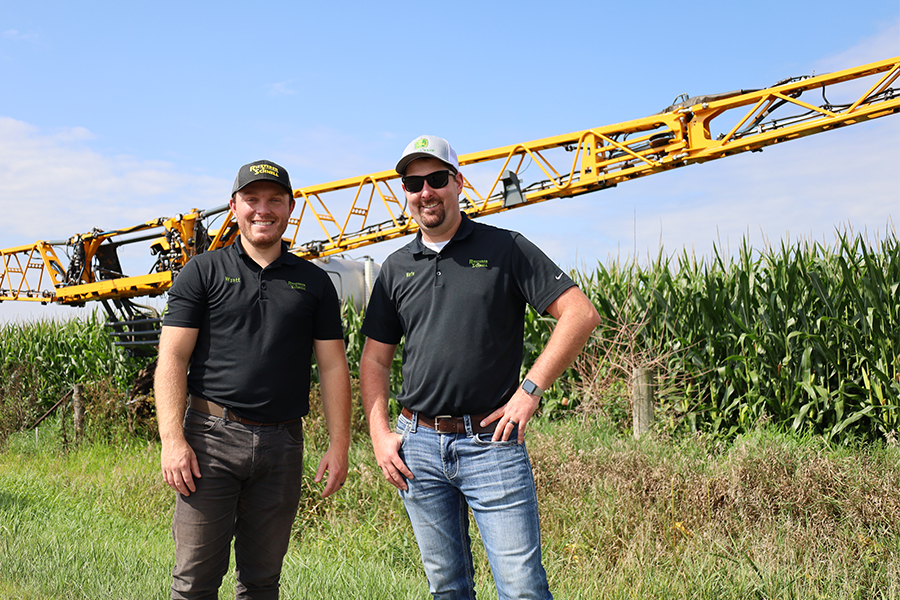
In a recent episode of Leap Forward with Riesterer & Schnell, Application Product Specialist Nate Soltvedt met with Technology Product Specialist Wyatt Davidson at Wiersma Farms in Central Wisconsin to discuss how John Deere AutoPath™ is improving application accuracy and efficiency throughout the growing season.
Introduced by John Deere in 2020, AutoPath takes guidance beyond a traditional AB line. Rather than simply tracking where the tractor traveled during planting, AutoPath documents the exact placement of every row using an implement receiver mounted on the planter or source implement.
This information is stored and used during future field operations, allowing equipment such as sprayers, combines, and other machines to follow the actual crop rows throughout the season.
According to Wyatt Davidson, one of the biggest advantages is AutoPath's ability to account for implement drift caused by side hills, contours, and varying field conditions. Traditional guidance systems follow the tractor's path, while AutoPath follows where the crop was actually planted.
Many Wisconsin fields present unique challenges, including waterways, rolling terrain, terraces, and irregular field shapes. These conditions can make maintaining consistent guidance difficult, especially throughout multiple application passes.
AutoPath creates a complete field guidance solution, including:
By using the original planting data, operators can enter a field with the confidence that their guidance lines accurately match the crop's location. This eliminates the need to switch between various guidance line types or manually recreate paths throughout the season.
One of the most valuable benefits of AutoPath is helping operators stay in the same tracks every time they enter a field.
During application, headlands and corners are often areas where additional crop damage can occur. Without consistent guidance, wheel tracks can widen as operators make multiple passes throughout the season. AutoPath helps ensure equipment follows the same route repeatedly, reducing unnecessary crop loss and helping fields maintain a cleaner appearance.
For growers and custom applicators alike, that consistency can add up over hundreds or thousands of acres.
John Deere has expanded AutoPath functionality by integrating it with Turn Automation on newer John Deere sprayers, Hagie sprayers, and floater applicators.
When paired together, the system automatically guides the machine through headland turns while maintaining alignment with AutoPath guidance lines. This creates:
• More consistent turns
• Reduced operator input
• Improved field efficiency
• Better crop protection on headlands
The result is a smoother operating experience and more repeatable field performance throughout the season.
Traditional guidance technologies such as row feelers or vision-based systems can face challenges as crops mature and canopy conditions change. Wind, leaning stalks, and tall corn can impact what those systems detect.
AutoPath approaches the problem differently.
Rather than reacting to what the machine sees above ground, AutoPath uses documented planting data to know where the crop was originally placed. This allows the system to stay on line even when tassels are blown by the wind or crops are leaning due to weather conditions.
For fungicide applications and other late-season passes, this level of consistency can make a significant difference.
Many operations rely on multiple employees, family members, or custom operators to complete field work throughout the year. One challenge that often arises is maintaining consistency between different operators.
Because AutoPath records and stores guidance data, operators can step into a machine and utilize the same documented field paths regardless of who completed previous passes. This helps create a more repeatable process while reducing uncertainty in the cab.
As sprayer technology continues to advance, operators are covering more acres at higher speeds than ever before.
During recent demonstrations, Riesterer & Schnell has seen customers comfortably running 15+ mph in tasseled corn while utilizing AutoPath guidance. By reducing steering workload and allowing operators to focus more attention on machine performance, AutoPath can help reduce fatigue during long application days.
As Wyatt Davidson noted on the podcast, confidence in the guidance system allows operators to trust the machine and focus on achieving the best possible application.
AutoPath isn't limited to a single type of operation.
The technology continues to expand beyond traditional corn production and can provide value for:
• Grain operations
• Dairy farms
• Vegetable growers
• Custom applicators
• Custom harvesting operations
Riesterer & Schnell's Technology Team regularly works with growers and custom operators to ensure AutoPath data can be shared and utilized effectively across multiple machines and operations.
AutoPath continues to evolve, with new software enhancements improving waterway navigation, display functionality, and integration with other John Deere precision agriculture tools.
If you're looking to reduce crop damage, improve guidance accuracy, and increase operator efficiency, AutoPath may be worth exploring for your operation.
The Riesterer & Schnell Technology Team is available to help determine how AutoPath can fit into your management strategy and maximize the value of your existing John Deere equipment.
Contact your nearest Riesterer & Schnell location to learn more about John Deere AutoPath and other precision agriculture solutions designed to help you leap forward.


